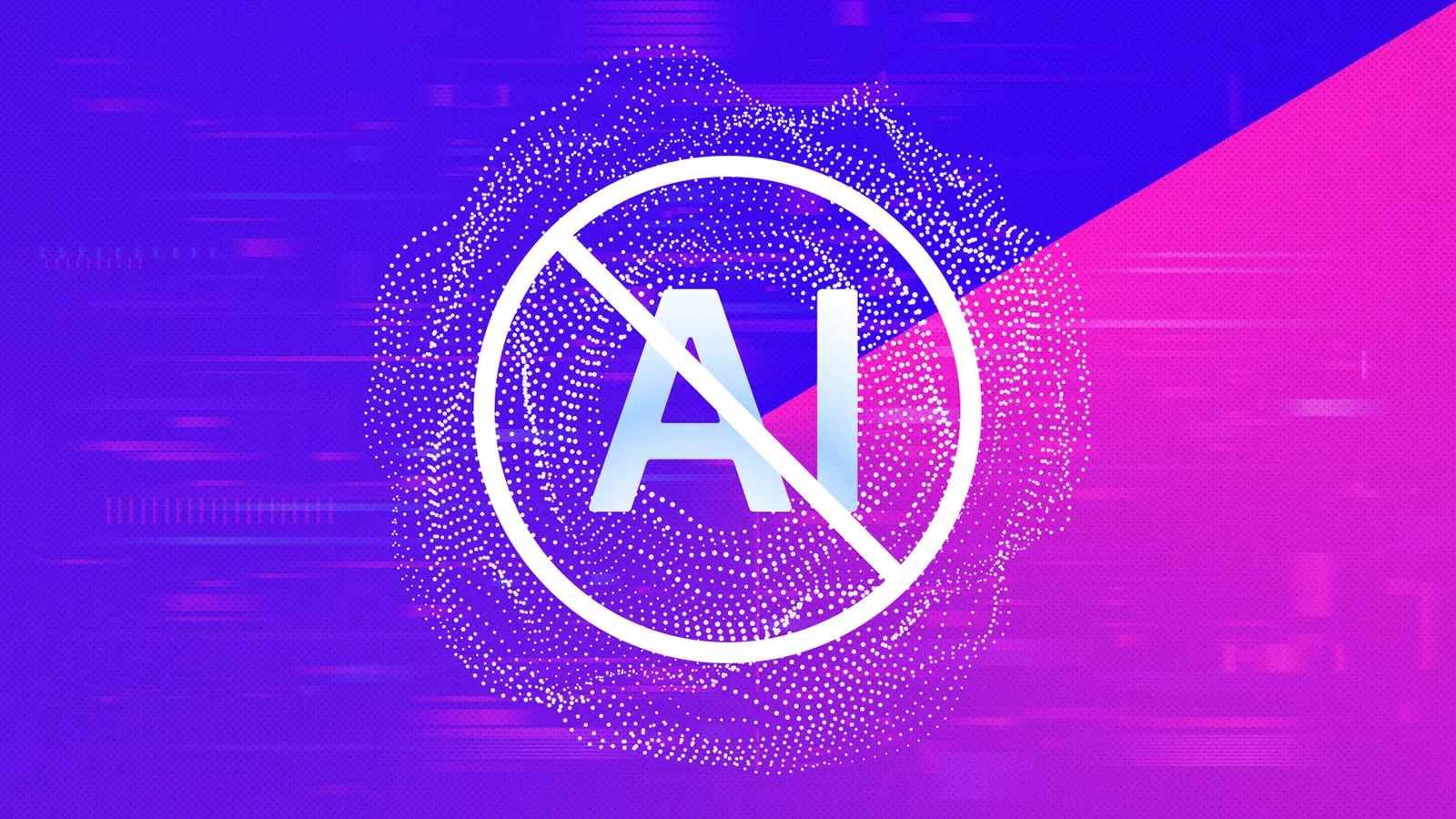
Artificial intelligence is changing the creative industry. But just because you can make something in 30 seconds doesn’t mean you should.
Let’s face it. AI has made it ridiculously easy to create just about anything.
Need a logo? Type a prompt. Need an ad? Type another prompt. Need a complete brand identity? Give it a few more seconds.
Congratulations. You’re now a creative agency.
Well, not exactly.
For businesses looking to save money, AI-generated creative is understandably tempting. Why pay a designer, copywriter, or agency when a machine can spit out something that looks pretty decent for next to nothing?
The problem? Pretty decent isn’t a brand strategy. And cheap creative can turn expensive when it doesn’t work.
AI Knows What a Dog Looks Like. Big Deal.
Let’s say you’re opening a dog grooming business. You ask AI to create a logo for your new company.
What do you get?
A dog. Maybe a paw print. Perhaps some scissors. Feeling adventurous? A dog sitting inside a bubble.
Groundbreaking stuff.
Now, there’s nothing inherently wrong with any of those ideas. But what makes your dog grooming business different from the other 47 groomers in town?
Maybe you specialize in anxious dogs. Maybe you offer a luxury experience. Maybe your entire business is built around making grooming less stressful for pets and their owners.
That’s where actual creative thinking comes in.
A good designer doesn’t start by asking what your business does. They start by asking what makes it different, why customers should care, and how to communicate that in a way nobody else is.
AI can generate dozens of visual directions in seconds. But without the right strategic thinking behind those directions, you’re often just getting variations of the most obvious answer.
And the most obvious answer rarely makes a brand memorable.
Your Printer Would Like a Word.
Here’s another fun surprise waiting for businesses relying entirely on AI-generated artwork.
Just because something looks fantastic on your screen doesn’t mean it’s ready to print.
Professional designers understand things like resolution, bleed, color profiles, vector artwork, typography, and how different printing processes affect the finished product.
AI image generators? Not so much.
Printers are increasingly encountering AI-generated artwork that needs significant cleanup or rebuilding before it can go to press. Low-resolution graphics, distorted typography, missing bleeds, and artwork that can’t be properly separated for printing can turn a seemingly inexpensive design into a costly headache.
That beautiful AI-generated brochure might look great on your laptop. But when your printer tells you the artwork isn’t usable, suddenly that free design isn’t looking quite so free.
There’s a reason professional designers spend years learning their craft.
And no, it’s not just to argue about fonts.
Creativity Isn’t Just Making Things Look Cool.
One of the biggest misconceptions about creative professionals is that we’re simply paid to make things look good.
Sure, that’s part of it. And we happen to enjoy that part.
But the real value comes from understanding the problem we’re trying to solve.
Who are we talking to? What motivates them? What’s happening in the market? What makes this business different? What should someone think, feel, or do after seeing the work?
These aren’t questions you answer by choosing the prettiest image from a collection of AI-generated options.
They’re questions that require research, experience, curiosity, judgment, and sometimes the willingness to tell a client that their original idea might not be the best one.
AI is incredibly good at recognizing patterns and generating content based on them. But great branding often requires challenging those patterns.
The goal isn’t to look like everyone else in your industry. It’s to give people a reason to choose you instead.
You Can’t Artificially Generate a Soul.
Here’s something AI still doesn’t have. Life experience.
It can analyze millions of examples of happiness, heartbreak, excitement, and empathy. It can write about those emotions, generate images that represent them, and even convince you it understands them.
But understanding what joy looks like and actually feeling joy are two very different things.
AI doesn’t have childhood memories. It hasn’t experienced the pride of accomplishing something difficult, the heartbreak of losing someone, or the excitement of watching an idea come to life.
And those experiences matter in creative work.
Great advertising connects with people because it understands people. Their motivations, frustrations, fears, aspirations, and all the wonderfully irrational things that make us human.
AI can learn to imitate those connections. But imitation isn’t the same as lived experience.
The same goes for creativity. You can teach a machine to produce something that looks creative. But that doesn’t mean the creative thinking, emotional understanding, and human perspective behind great work automatically come with it.
And that’s the part we believe is worth protecting.
Because the best creative doesn’t just make people look. It makes them feel something.
So, Is AI the Enemy? Hardly.
Here’s where things get interesting.
We actually like AI.
There. We said it.
At Knoodle, we see real value in using AI to streamline workflows, organize research, explore early ideas, speed up repetitive tasks, and give our creative team more time to focus on what matters.
Thinking.
AI can be a fantastic assistant. It can help get the wheels turning, challenge an initial direction, or take some of the tedious work off a creative’s plate.
But there’s a difference between using AI to support the creative process and letting AI become the entire creative process.
One makes talented people more efficient.
The other risks replacing thoughtful work with whatever happens to come out of a prompt.
And while AI tools will continue to improve, generating an impressive image is still only one small piece of building a successful brand.
The Cheap Creative Honeymoon Won’t Last Forever.
Right now, businesses are experimenting. And why wouldn’t they?
The promise of getting professional-looking creative almost instantly, without the traditional investment, is hard to ignore.
But as more businesses flood the market with AI-generated logos, websites, ads, and social content, something interesting is likely to happen.
Everything starts looking suspiciously familiar.
When everyone has access to the same tools, standing out becomes even more important.
Businesses will eventually have to ask themselves whether saving money on creative is worth sacrificing the differentiation, consistency, and strategic thinking that help build a brand over time.
Some will discover that what they saved upfront costs them more in revisions, missed opportunities, or a brand that simply doesn’t connect.
And that’s where experienced creative professionals will continue to prove their value.
The Future Still Needs Creative Thinkers.
AI isn’t going away. Neither are we.
The tools will get better. The workflows will get faster. And the creative industry will continue evolving, just as it always has.
But technology doesn’t eliminate the need for good ideas, sound strategy, or the experience to know what actually works.
At Knoodle, we’ve spent 27 years helping businesses figure out what makes them different and how to turn that into marketing that connects with real people.
We use new tools. We embrace change. We even let AI handle some of the boring stuff.
But when it comes to building brands, solving problems, and creating work that actually means something?
We still believe the most important part of artificial intelligence is the intelligence of the human using it.
And we’re not handing over the creative department to a chatbot anytime soon.
Anyone Can Make a Logo. Let’s Build a Brand.
AI can give you a logo in seconds. But building a brand that stands out, connects with people, and actually means something? That’s where strategy and human creativity come in.
At Knoodle, we bring both. Let’s create something worth remembering.