What does it take to preserve history, build community, and keep Western culture alive in a modern city like Scottsdale?
In this episode of Knoodle Founder’s Hour, host Rosaria Cain sits down with Dave Alford, founder of the Scottsdale Rodeo Museum and a lifelong steward of Arizona’s rodeo heritage.
Dave shares the untold story behind the Scottsdale Rodeo—now in its 70+ year legacy—and how a small group of volunteers built one of the most respected community-driven rodeos in the country. From growing up in Old Town Scottsdale to riding bulls, running rodeos, and turning a city-owned building into a living museum, Dave offers a rare, behind-the-scenes look at what it really takes to sustain tradition while adapting to modern realities.
This conversation goes far beyond rodeo history. Dave breaks down:
- How nonprofit organizations can thrive with 100% volunteer leadership
- Why tradition, consistency, and restraint matter more than hype in event marketing
- The truth about animal welfare in professional rodeo
- How scholarships and youth programs are shaping the next generation of rodeo athletes
- Lessons in leadership, family legacy, and community-first business thinking
You’ll also hear how smart branding decisions—like repositioning Parada del Sol as Rodeo Scottsdale—dramatically increased reach, visibility, and engagement, proving that the right marketing strategy can honor the past while unlocking future growth.
Whether you’re a founder, marketer, nonprofit leader, or simply fascinated by Western culture and Arizona history, this episode delivers powerful insights wrapped in unforgettable stories.
Listen now and discover how legacy, leadership, and smart marketing can ride side by side.
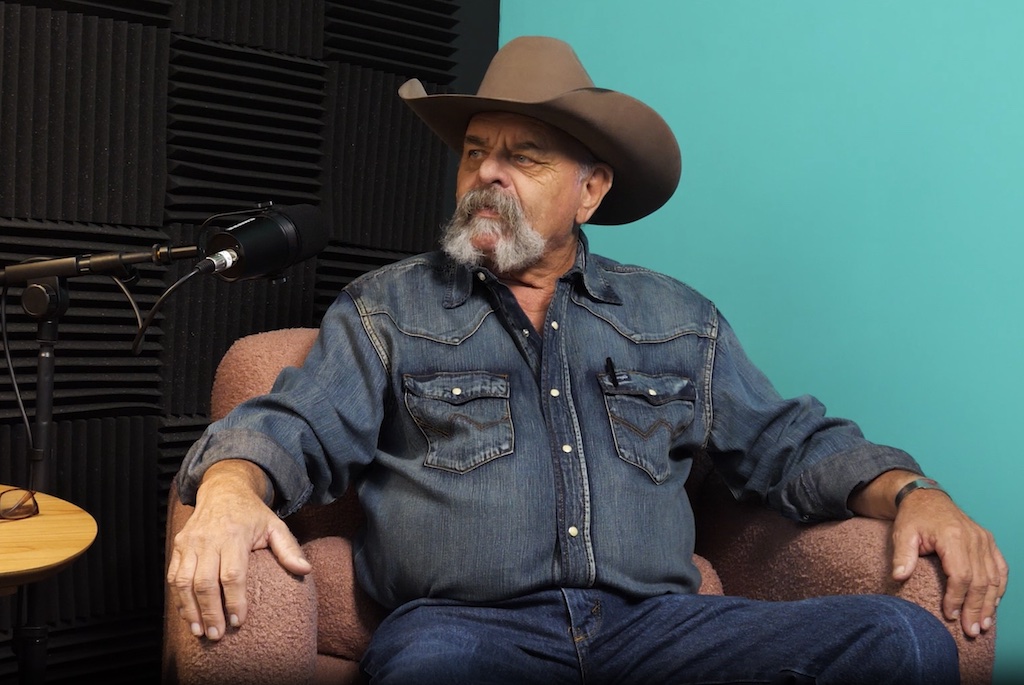
Scottsdale Rodeo Museum Founder Dave Alford
Transcript
Announcer 00:00
Welcome to Knoodle Founder’s Hour, where we go founder to founder with host Rosaria Cain. Today, our special guest is Dave Alford, founder of the Scottsdale Rodeo Museum, a living tribute to the history, heritage and enduring spirit of Western and rodeo culture in Scottsdale.
Rosaria Cain 00:19
Good morning, everyone. Good morning. Dave, welcome.
Dave Alford 00:22
Well, thank you very much.
Rosaria Cain 00:25
Happy to have you at Knoodle studios. You’re my favorite cowboy, and you have an enormous past, some really fun things to talk about. Tell us about the Scottsdale Rodeo Museum.
Dave Alford 00:38
Okay, the museum is in Old Town, Scottsdale, on Second and Brown, right across the street from the old blacksmith shop. And the blacksmith shop been there since 1909 and right behind that is Los Olivos, and it’s been there since 1947 kind of the only two real old, established businesses that are both still owned by the same families for over 100 years. And so the museum is right across the street from there, which, when I was a kid, growing up in Old Town Scottsdale that was right in the heart, well it was on the edge of town. You had your shopping and your Lulu Bells and everything in Old Town Scottsdale, Lulu Bells and Pink Pony and and Sprouse-Reitz and the Pool Hall House of Carom. This is where, you know, my juvenile delinquency started as a kid,
Rosaria Cain 01:25
Lute’s Pharmacy
Dave Alford 01:26
and Lute’s Pharmacy, yeah, had the great soda fountain there, and so it was just a great place to grow up. So the museum came about, well we’ve been in this building for about six years now. It’s a city owned building called the Noriega Livery Stable, and the Noriega story is a whole nother beautiful topic we could talk about sometime, but very historic Harvey Noriega. He’s the this building was built in 2004 and named for Harvey. It’s called the Noriega stables, and it’s not real stable. It’s more of a studio type building. It’s only 1300 square feet, but we have a jam packed full with memorabilia for early Scottsdale and focusing on the rodeo. The Rodeo with this year is March, 5th through the 8th at West World and it is going to be the 73rd annual Scottsdale Rodeo. And we’re actually finding some new artifacts. Tom Droze, is a friend of mine, came up with a rodeo program from 1950 for Scottsdale Rodeo. It wasn’t a pro rodeo yet, but it was a rodeo, they called it a horse rodeo. And I always wondered my dad had won a buckle in 1950 and it’s looks like there was a rodeo before when Prada Del Sol started in 1953 we’re finding out some new stuff about the rodeo that we we didn’t know through the archives and and minutes and things of meetings that we had, we always thought first one was 53 when the Jaycees took over Prada Del Sol, which original name was sunshine festival, until the Jaycees took it over because it got too big, the Chamber of Commerce couldn’t handle it, so back to the museum. A lot of artifacts have been hand down over the years. We had a rodeo arena on Hinton and in Old Town, Scottsdale, and we had a clubhouse, and it was full of the old posters and magazines and and that type of thing. And in 1985 the city needed that property, which it worked out well, it was too small to have a full rodeo there. So we moved out to Rawhide for 10 years, and then after the 10 years at Rawhide, we moved to Westworld, where we are now. So with all this artifacts, we’d really didn’t have any place to put them. So, for almost 20 years, all these saddles and posters and great pictures sat in my barn at my house, so after a lot of negotiations, several years, got the city to lease us a building where the museum is now Second and Brown, and it is jam packed full of saddles and pictures from the 50s and 60s, all of Scottsdale, Prada Del Sol, Rodeo history and a lot of downtown history
Rosaria Cain 04:21
Well, tell us about that history. I’m sure there’s some crazy things in your memorabilia. What are the standouts? If there’s two or three things that would really amaze people?
Dave Alford 04:32
Yeah, yeah. When people see the aerial shot of Scottsdale in 1953 Scottsdale was just two square miles, and all the outskirts of it was either cotton fields or alfalfa or citrus. And when people come in the museum, I say, “Oh, here’s a picture of 1953” and what really amazes people is where Fashion Square is right now, that was our original rodeo grounds. Got a great aerial picture of that. You can see the canal and Camelback and Scottsdale Road converge all come there. They call it the waterfront property convergence, and that was where our original rodeo grounds were.
Rosaria Cain 05:10
That’s amazing.
Dave Alford 05:11
It is a fantastic picture.
Rosaria Cain 05:12
Wow. And how long did it take you to get this museum, up and running?
Dave Alford 05:19
Well, it took many, years to get the city to let me rent at least that building. They had lots of artists and cooking classes and type of thing in there. They ran carriages out of the outside area. So it took many years to get them to see my vision of a museum in there. Once we got that, we had to build a restroom, and we had to put in some fire safety type doors. So I had 30 days of construction. But as soon as that was over, we got our occupancy certificate, it only took us about 24 hours to actually put things on the wall and make it look like a museum. My my whole family and grandkids and grandkids were there late into the night, drilling holes on letters, putting posters up, and in 24 hours. It became a museum, and we’ve been adding to it ever since we’re really packed in there. So there’s really a lot of really, really historic rodeo and Scottsdale items in there,
Rosaria Cain 06:23
and it’s a big family affair.
Dave Alford 06:24
Well, yeah, that’s that’s why I had so many kids. That’s my workforce.
Rosaria Cain 06:28
How many kids do you have?
Dave Alford 06:29
I only have five,
Rosaria Cain 06:31
Only five!
Dave Alford 06:32
Only five, and as of last week, 13 grandkids, and the day after Christmas, there’ll be 14 grandkids and three great grandkids, and their age from 25 to two weeks old, and they all have a job, and they all work very hard, and they’re all They’re all make their living in the rodeo or livestock business, so that that tradition carries on through them. My oldest son owns rodeo bulls. And my daughter was an ag teacher for many years, and my next son runs a big rodeo arena in Queen Creek. My other two boys are still professional bull riders.
Rosaria Cain 07:12
Wow.
Dave Alford 07:13
So, it’s in our blood. It’s what we do. And my dad was on the original committee, in 1951 that thought of the rodeo in Scottsdale. I’ve got the minutes of those meetings from back when the Jaycees took over. It’s just so cool, and to see that documentation of how the rodeo started as an idea and turned into the big event that it is now
Rosaria Cain 07:37
let me dig into your background, because this is so interesting to me. Did you ride a bull?
Dave Alford 07:43
Oh, yeah. It took me 10 years to figure out I wasn’t very good at it. I gave it a go.
Rosaria Cain 07:47
What is a what goes into riding a bull? Because your kids do it. It sounds like your two sons do it,
Dave Alford 07:53
yeah, yeah. Well, there’s, there’s a lot. Let’s see, my dad used to tell a little joke about, you want to be a bull rider. You take 12 marbles and you put them in your mouth. And every time you ride a bull, you spit one out, and as soon as you lost all your marbles, you’re a bull rider.
Rosaria Cain 08:07
Okay. Well, there you There you go. Well, what did you learn from riding bulls?
Dave Alford 08:13
Don’t!
Rosaria Cain 08:14
[Laughter] Any lessons in life?
Dave Alford 08:17
Yeah, absolutely. Nowadays… when I was riding bulls, I mean, I always started pretty much on an amateur level. I tried to go pro a few times, but you got to really be dedicated. It’s a lot of travel. It’s not all drinking beer and chasing and just being crazy all the time. There’s a lot to it, if you want to take it seriously, nowadays, these kids can make life changing money in the rodeo world. Just last week, was the national finalist rodeo. It’s 10 days. It’s sold out all 10 days, 17,000 seats in the Thomas & Mack in Las Vegas, the top 15 cowboys and all eight events and cowgirls in the breakaway and the barrel racing qualify for that. So if you make it in the top 15, and first place pays $30,000 a day, and there’s 10 days, so you can make life changing money if you make it to the national finals. So your goal during the year is to be in that top 15, you got to hit at least two rodeos a weekend, so you might be in Albuquerque and then in Phoenix, and then in Poway and then in Seattle. You know, Idaho it’s a lot of traveling. So one thing I did learn, good lesson I learned, was always travel with somebody as good or better than you. So one of you wins money, so you can get some McDonald’s and some gas. And you always make sure that you travel with a guy the same size as you. So if you don’t have any clean socks and clothes, you can steal his.
Rosaria Cain 09:52
See men can do that. I think, I think that’s awesome. And so through all this time you’ve you’ve been. A rodeo boss as well. We’ll talk a little bit about that.
Dave Alford 10:04
Sure,
Rosaria Cain 10:05
How did you end up in that position?
Dave Alford 10:10
What’s the old saying? I say, Will volunteers step forward and everybody else step back a step? So I was the only one standing out there. No, I used to work to rodeo. After my brief career, tried to ride bulls and broncs. I still had the desire, and we always tried to keep a few bulls or a few horses around to practice on. And then when the rodeo would come to Arizona, I worked Yuma Rodeo as a teenager, and Tucson and Scottsdale and Payson, and I was just a helper. The strip and shoot, loading cattle, unloading, watering, feeding. There’s a lot goes in. It’s 24 hours a day when you own livestock. Livestock comes first you feed them, before you feed yourself, and hauling animals. And then you got to settle them in and turn them, especially in new arenas. They don’t know fencing set up so, and they’re very smart animals, rodeo animals, they travel, and they love to perform. So I would work these rodeos for the odds, bods and the honey cuts and service rodeo. And it just kind of evolved into, hey, you run in the strip and shoot. Hey, now we need you to be the shoot boss. So that’s the guy running the shoot. So I did that for many, many years at Scottsdale and a few other rodeos. And the way that was set up, and a lot of rodeos are set up, were set up designed like this was a Jaycee chapter. So you were a member of the Jaycees, and you ran for office, and you got assigned a chairmanship that you might be in charge of advertising, might be in charge of parking, so once you’ve kind of done it all, then you could be the rodeo boss or Parada boss, because now you know all the aspects of parking and getting sponsorships, and it just evolved into words. And the Jaycees was set up where you held the position one year, like if you’re in charge of tickets, the next year you could be in charge of programs. Next year you could be in charge of concessions. So you learned it all the Jaycees across the country, all, most of them folded in 2008 so that lifted the burden of if you’re in the Jaycees, the burden was, it was 18 to 35 when I was in there, when you hit 36 you were out. You could still volunteer, but you didn’t vote, you didn’t and so a lot of knowledge left,
Rosaria Cain 12:29
so you aged out.
Dave Alford 12:30
You kind of aged out of the Jaycees, as a young used to be called a young man’s leadership organization, young persons, and the Supreme Court says women. And that was the best thing to ever happen to Scottsdale Rodeo was letting women be on the committee, because that’s the backbone, that’s the workers. And so when the Jaycees went away, and it lifted that burden, a lot of us old timers continued on after 36 and kept the same nonprofit we’re a nonprofit. We’re 100% volunteer organization. Nobody’s paid, and we volunteer and make it happen, and we take care of a lot of charities. And as the nonprofit 501 C and so is the museum and the rodeo are both 501 C’s, and love our youth programs and that type of thing, so that it just changed our workforce. When the structure of the Jaycees kind of went away and now you have a position, you keep it like our ticket person’s been the same one for 15 years.
Rosaria Cain 13:33
To get that level of experience
Dave Alford 13:34
And bring that knowledge with you and say, “Let’s not reinvent the wheel. This works perfectly”. We’re very, very strong on, if it works, use it. Tradition. We don’t like to change things, just to be changing things, you know, we put on an old fashioned rodeo. We don’t have a lot of fireworks. We don’t set the ground on fire. We don’t introduce every committee person, somebody comes to a rodeo and spends their good money to be entertained. You don’t go to a Diamondbacks game. And then they say, “We want to thank Fred for doing such a good job on mowing the grass today”. They want to come and be entertained, so we have our parties later. And thank everybody. They come to see a rodeo, and you’ll see a good old fashioned rodeo at Scottsdale every year.
Rosaria Cain 14:18
Sounds great. Let me ask you about the livestock. Do they enjoy it? So you’ve got, you’ve got your bronc, you’ve got your bulls, do they enjoy it too?
Dave Alford 14:27
Oh my gosh, yes. There’s some of those,
Rosaria Cain 14:29
because there’s some misinformation.
Dave Alford 14:30
Yeah, and you get that a lot a lot of questions about it. For one thing, you can’t make an animal buck, there’s nothing that goes on to any of their private parts or anything that injures them or whatever. So a horse and a bull has a flank area right where a man’s belt goes. And a lot of people are ticklish right there. Some people aren’t. So horses and bulls are the same way you put a light flank strap on there, and it’s covered in sheepskin, so it’s very soft, and they feel like they can kick it off. So when you open that gate and they come out, they feel like they can kick it off.
Rosaria Cain 14:31
Oh, it’s not that they’re angry.
Dave Alford 14:48
No, not at all. Not at all. If you put a horse, it’s snowing and raining out, and you put a horse in a barn stall for a week, and you open the door, what’s the first thing they do, they run and they buck because it feels good. They feel good to be free and run and and it’s such a natural thing for them. Some of them are just better at it than others. And the rule book and the PRCA pro rodeo is three inches thick. And if you look at the animal rights part the animal conditions, it’s 90% of that book is on how to treat the animals. If you abuse them, you’ll be out, and once you’re out, you’re not getting back in. You can’t. They’re your family. They’re most important thing in rodeo.
Rosaria Cain 15:56
They’re the stars.
Dave Alford 15:56
They’re the stars. I can find that 18 year old kid to get on this bull, but I can’t find a bull as good as Oscar or Grasshopper or or, you know, these other great bulls. You know, they come around once in a while, and they’re very, very expensive. You can make a lot of money if you got good bulls.
Rosaria Cain 16:13
Really, are they hard to find?
Dave Alford 16:14
They’re hard to find,
Rosaria Cain 16:16
huh? Kind of like a good man,
Dave Alford 16:20
that’s right. And you match them up with some of these cowboys today, because these kids take it so serious, and they work out, and they’re healthy, and they live a good, clean lifestyle, and they make money, they make a good living at it, and they can be set for life if you have a good 8, 10, year career as a rodeo star.
Rosaria Cain 16:37
Well, growing up, how did you end up here? I mean, who shaped you? What made you the man that you are?
Rosaria Cain 16:44
Well, my dad came to Scottsdale 1946 when he got out of World War II, was in the Marine Corps as a combat vet and Marine Corps, and came, kind of chasing my mom. Pretty much my mom’s family came here in the 1930s to work in Globe, in the mines, and that was so sporadic. They got in the cattle business at a ranch outside of Roosevelt by Roosevelt Lake. And we were just around livestock our whole time. My dad worked for Salt River project for almost 40 years. He ran the canal systems in Scottsdale, so where the waterfront property is and all that. Those are still canals. They still irrigate fields with it, and that’s what my dad did. So we always had livestock. You know, was as a little bitty kid, I remember my dad putting us on calves and and wanting to be rodeo stars. And then, when you get older, to become a teenager, get in high school. Well, you know, we’re just going to be the next world’s champion rodeo stars. You know, me and all my buddies, some guys are more into sports, and we played football and Little League and that type of thing, but rodeo was our, our main goal. We wanted to be rodeo stars. And then, in the 60s and 70s, in Scottsdale, there was a gentleman by the name of Dennis Reiners. Dennis was our hero. He was a 1970 world’s champion saddle bronc rider and the most charismatic, coolest guy ever. He was in quite a few movies. He played a part of Hot Pistol Billy was his name in a couple of movies, and he was rodeo star that flew his own plane. And he did fly his own plane in real life. They made the character around him. But he was a bronc rider and a bull rider, and he taught us, and we still, to this day, when we do our youth programs, we teach these kids to show up on time, wear a long sleeve shirt dress, nice, be respectful. That’s the whole thing in the cowboy rules. Cowboy lifestyle. Be respectful.
Rosaria Cain 18:47
Sounds like good rules in business too.
Dave Alford 18:49
And these, watch these kids grow up and that, and that is the main thing we do at the museum, is any revenue we do, We do scholarships. We do a lot of youth scholarships. We did whole bunch last year.
Rosaria Cain 19:03
So what do the scholarships go to?
Dave Alford 19:06
So we, I’ll jump around your question just a little bit. So a few years back, during covid, I had way too much time on my hands, and Arizona has over 100 license plates in Arizona, so I go to the legislature, and I said, How come there’s not a rodeo plate? And Joe Chaplik, who was our representative in Scottsdale, says, we have to write up a bill. And it has to, you know, what a bill is. You know, it has to go through all the process, the House, the Senate, all the committees and all that. And we got it through. And so now there was a rodeo license plate, and Ben Heimer was the artist that drew it up. And it was a bull rider in the state of Arizona, and some beautiful colors on this. And Ben works at here, at Knoodle, and great artist. And so now there’s a license plate. And if you as a fan, own a car in Arizona and you want to buy a plate, it costs you $25 extra a year to show your support. $17 of that comes back to the museum. So this is our third year.
Rosaria Cain 20:14
Oh, so that it funds the museum, essentially?
Dave Alford 20:16
It funds the scholarships.
Rosaria Cain 20:18
Okay, okay
Dave Alford 20:19
we don’t use any of that. We use it all for scholarship and promoting rodeos. Let’s say Payson rodeo had a fire and couldn’t have their rodeo that year and they’re financially in trouble, we could use that money. That’s just a poor example, but it’s an example of helping other rodeo committees, our rodeo families, somebody gets injured, buy their groceries, pay their light bill. So far in the three years we’ve done it, we’ve given it all away in scholarship, so we don’t even have an application. My my grandkids, my kids, are real big in the Youth Rodeo. So we go to a lot of youth rodeos, and we see these kids. We see the kids with potential, the ones that are struggling with their piggy bank to pay their entry fees. But yet the kids really good, and maybe not the best situation at home. So we try to fund that. We try to find that kid and surprise them with $1,000 or $1,500 or $2,500 scholarship, or we pay their dues, or we give them some traveling money, some gift gas cards, whatever it takes. So that’s the, really, the the feel good part, and the mission statement of the museum is to help these kids in Arizona.
Rosaria Cain 21:34
And it’s an unexpected gift.
Dave Alford 21:36
Yes,
Rosaria Cain 21:36
they don’t even know that it’s coming.
Dave Alford 21:38
They have no idea. They have no idea. Yeah, yeah.
Rosaria Cain 21:41
On another note, how are you approaching marketing these days?
Dave Alford 21:47
Well, you guys, Knoodle has been our source of, I say, our expansion, and everything that we’re doing 8, 10, years ago, we came together. And
Rosaria Cain 22:01
Has it been that long?
Dave Alford 22:02
Yeah, yeah. And you guys have always been spot on with where to spend our advertising money, and the direction of the market. A good example is… and my daughter in law, who owns a social media company, social and local, local and social, you both, almost the same time, came up with the same idea of kind of rebranding, Parada Del Sol. Parada Del Sol, and a lot of people really balked at it, but it’s really worked out kind of, let’s call it Rodeo Scottsdale. And right off the bat, what really jumped off the page was we’d send out a lot of social media, Facebook, the whole thing “Parada Del Sol” also get your tickets, ask questions, and we got like, 3000 hits, right? So then you said, Try this. Try Rodeo Scottsdale. Because people will Google Scottsdale. They’ll Google Rodeo, they see Prada Del Sol. I think it’s maybe like a Charro, Mexican type rodeo, or something like that. They don’t understand the history of it, so we’ll never not use that. We’re Prada Del Sol Inc. That’s our legal name. But we marketed under Rodeo Scottsdale, and we got over 50,000 likes and looks and followers and stuff, after the name implementation after you guys convinced me to do that. So that’s just a good example.
Rosaria Cain 23:26
Thanks for that. I really do appreciate it. How about sponsors? Is it? Is it tough to find sponsors? Or how’s that?
Dave Alford 23:33
Yeah, it is. It gets tougher. It gets tougher all the time. So we have some long, long time, decades sponsors, Coors, Pendleton Wrangler, City of Scottsdale, we have a dentist has been with us for 10 years. Brad Briggs, he loves the rodeo and and he attempted to ride bulls as as a young man. So he knows the struggle and what it takes. So I try not to really rely on sponsors ticket sales as the main thing. And we try to really make a reasonable ticket price so people can bring their family.
Rosaria Cain 24:14
Can you can you share what those prices are?
Dave Alford 24:17
Oh yeah, yeah, the best seat in the house is $75 and that’s half what all the other rodeos get. And our general admission is 25 and the general admission ticket bleacher seat is an excellent seat. There’s not a bad seat in the house. And kids are five bucks. Under six are free. So you know,
Rosaria Cain 24:36
family event
Dave Alford 24:37
You want to bring four or five year kids or neighborhood kids? It’s not going to break the bank, and so sponsors is important. I don’t know what the word is sell or sold to sponsorship, but I’m not really held to a lot of the sponsors would take 200 tickets and that type of thing. And I don’t. Know, I’d rather not have that burden to give them so many tickets that, because we sell out our rodeo sells out a month ahead of time, and I won’t want those tickets available for people that want to come and bring their family and not, you know, the number one car salesman in a car dealership or something gets, you know, 50 tickets. So I try to make it fair and reasonable. So, you know, sponsorship is very important, but I don’t,
Rosaria Cain 25:25
they don’t dominate your your market.
Dave Alford 25:27
I don’t beat myself up or not sleep at night worrying about sponsorship, because we figured out pretty much how we can stay in our budget and fund this and and stay afloat without you know, our major sponsors are fantastic, don’t but you watch, do you look at our rodeo? I don’t have 50 sponsors at the bottom of the page. Or you’ll see that dozen or so good sponsors that have been with us for a long time, and that means a lot to us, that we’re true to them and they’re true to us, and if we did happen to have a bad year, they’d stay right with us during Covid. Those sponsors did not go away. They stayed with us even though we were held only 400 people. It holds 3000 and we could only sell 400 tickets. But we had. We did not cancel it all. Most of the rodeos around the country, especially Arizona, canceled, and we figured out a way to still have because those cowboys needed that paycheck. You know, that’s like telling you, oh, for the next two weeks, you know, you’re laid off, you don’t get to work,
Rosaria Cain 26:28
and we needed something fun to do,
Dave Alford 26:30
And we needed to people to still be able to get out.
Rosaria Cain 26:33
No, that’s absolutely true. So speaking of sleeping at night, what kind of routines keep you grounded? What do you what do you do when you’re not around a horse, around a saddle…
Dave Alford 26:44
Well, I’m around a horse every day during my backyard, but So, and that’s that’s been instilled to me since I was a kid. When I get up in the morning, you know, I got my little ritual, oh God, I love to watch the sun come up this morning. The red clouds were just fantastic. And I count my blessings. And, you know, start my day and but before I eat or I’ll get a cup of coffee, but before I feed the horses, I feed the animals. I feed my chickens, because I gotta have my chicken, and I’m already starting on my spring garden. So I have a huge garden. I love my garden. That’s what really keeps my sanity.
Rosaria Cain 27:22
Okay?
Dave Alford 27:24
I go out and like, I’ve still got things from this summer. I still have pepper my jalapenos, some tomatoes that are still producing from all summer long, even during the heat. But I baby them. I put shade over them, I put up an umbrella. I say, save my jalapenos. That’s I gotta have those.
Rosaria Cain 27:42
Save the jalapeno.
Dave Alford 27:43
So my garden is my refuge.
Rosaria Cain 27:47
What will you be doing 10 years from now?
Dave Alford 27:50
Oh, my, that’ll put me in my 80s. So let’s see, no rocking chair. Let’s see, I’ll probably be doing the same thing. If my pacemaker holds out. I’m good. I think I’m still good. I don’t have to do much. My kids, all five of my kids, work the rodeo. My son Clayton’s a rodeo boss. My son Cole does the grounds. My daughter Quincy is PR person, fantastic. And my other son runs our big music program. We always have a major artist that’s included with your rodeo ticket, so they’re all in there. And, you know, and then when I say my family, I mean my rodeo family too. You know, Kim’s been with us 20 years, and she’s the Rodeo Secretary and Treasurer, and Cheryl and Kayla and all the girls that run the tickets and everything. So, you know, it’s a huge family, and in 10 years, I’ll be in my rocking chair and still telling them how to do it, but they’ll just go on and do their own thing. They don’t need my advice anymore.
Rosaria Cain 29:00
I don’t know if you could surprise people, but what one thing would surprise people about you that they don’t know?
Dave Alford 29:09
Well, I’ll give you a cute answer. I hate ketchup. I can’t I eat ketchup. You put ketchup on a sandwich. I can’t
Rosaria Cain 29:19
With french fries?
Dave Alford 29:20
Oh, terrible!
Rosaria Cain 29:22
Come on!
Dave Alford 29:22
No, no. That’s why they made ranch dressing. No, no ketchup. I don’t know what it is, and I love tomatoes. I grow the greatest tomatoes. I make greatest salsa. But when you make it into the Red Devil’s glue, no, I just don’t like that. There’s just I was born that way. But the coolest thing, or the thing that I can come up with, kind of a almost cute answer is, everybody asked me, well, you’re born at Scottsdale. Said there wasn’t a hospital. I said, Well, what makes you think I was born in a hospital, but we lived at the end of a dirt road in the canal where Osborne dead ends. So. 64th Street. And they did get me to the my mom to the hospital. My birth certificate says Mesa Southside hospital, Thanksgiving Day 1953 but my dad swears that I held my breath for two days till I got in Scottsdale to take my first breath in Scottsdale. So I’m true Scottsdale native.
Rosaria Cain 30:21
Wow. I don’t think we can top that well. Thank you for sharing that and so many things, and your years to the community. We appreciate it. Thanks for coming
Dave Alford 30:32
Well, I sure appreciate you. Guys have done a wonderful job on our success. We couldn’t have done it without your guys and your guidance. So thank you everybody at Knoodle.
Dave Alford 30:40
We appreciate the relationship.